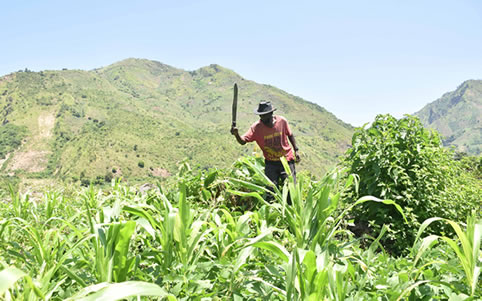
On a sunny morning, the water streams of the Ruzizi River hastily burble from Lake Kivu down the Lake Tanganyika. In the plain of the Ruzizi River which forms a natural border between the Democratic Republic of Congo and Rwanda, farmers both women and men from both countries take care of their farms.
It is on the Ruzizi River where a 206 MW Ruzizi III Hydropower Plant under the Ruzizi III Hydropower project developed by Ruzizi III Energy Limited (REL) will be hosted. The Ruzizi River plain will host different infrastructures of the Ruzizi III Hydropower plant including the reservoir, dam, powerhouse, access road, permanent accommodation facilities, headrace tunnel, substation, and switchyard among other infrastructures. Once completed, the hydropower plant will equally provide electricity to the population of Burundi, the Democratic Republic of Congo, and Rwanda.
The activities of developing the Ruzizi III Hydropower Plant will affect around 841 households comprising 4,713 people in Rwanda and 1,546 households comprising 13,928 people in the Democratic Republic of the Congo. The project activities will physically displace only 7 households in Rwanda and 50 in DRC. These project-affected people will all be duly compensated following the land and property valuation process carried out by REL from September 2021 to February 2022. No Project components are situated in Burundi. Therefore, no project-affected people from Burundi.
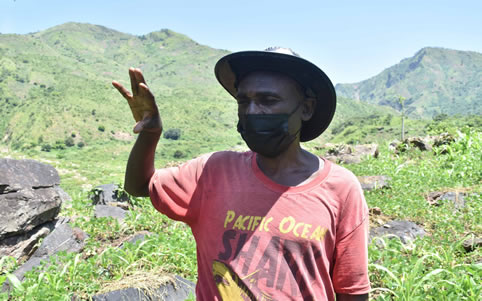
Nsabimana Innocent, 61, who on that sunny morning of 5 April 2022 was weeding his farm located in the Ruzizi River plain, is among the project-affected people from Rwanda, Bugarama Sector, Rusizi District. He has a land estimated at 39,370 square meters. He has cultivated different crops on his land, including maize, beans, and cassava. Through different consultation meetings, Nsabimana said that they have been regularly consulted, informed, and involved in different phases of the Ruzizi III Hydropower Project.
“We were informed that a project will be carried out in this area. It aims at generating electricity that will be equally shared with three countries (Burundi, Democratic Republic of Congo, and Rwanda),” Nsabimana said.
To erect different infrastructures, lands around 226.2 ha (2,262,000 Square meters; 963,000 Square meters from the Democratic Republic of Rwanda and 1,299,000 Square meters from Rwanda) will have to be acquired. Nsabimana said that through several consultation meetings with the project developer, they have received ample clarifications about the project as well as the land and property acquiring process.
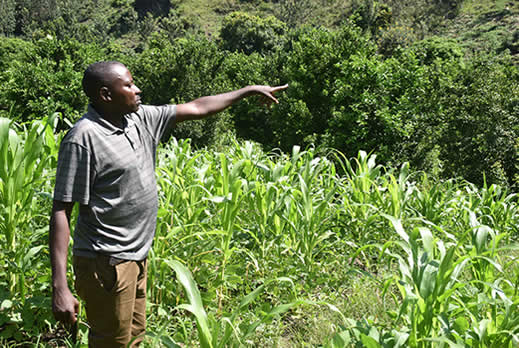
“Before proceeding with the land and property valuation process, we have been consulted and informed of the whole process. I have been pleased by the land and property valuation process. They counted everything when they came to valuate my land and all properties. They measured lands and counted trees, fruit trees, and food plants. They tallied everything on my land. The process was fair and transparent. I have been satisfied by the valuators, and I am looking forward to the positive outcomes of the valuation process,” said Nsabimana after weeding his maize farm.
REL has established the resettlement committees to ensure the project-affected people have a platform to voice their preoccupations. The members of the resettlement committees whose primary role is to support REL in grievances redress have been elected by the Project-Affected people. They also have properties to be acquired by the Project.
Mukeshimana Saidi, one of the project-affected people from Rwanda living in Bugarama but having land in the Nzahaha sector, Rusizi District confirms that the resettlement committee’ members have greatly impacted the community through mediation and grievance redress.
“The resettlement committees have played their role. To date under this Project, they have resolved different grievances, including misunderstanding of family members over the plot of land, providing mediation between wives and their polygamic husbands, addressing conflicts between landlords and their tenants, and other addressed grievances under this project,” said Mukeshimana.
Mukeshimana added that he would like to see the resettlement committee carrying on their responsibilities the sentiments he echoes with other project-affected people in the project area. “We have appreciated the role of the resettlement committees; we would like to see them going on with their responsibilities till the project completion,” Mukeshimana added.
Since their establishment in September 2021, the resettlement committees in close collaboration with REL as well as the local leaders in both the Democratic Republic of Congo and Rwanda have played a key role throughout the land and property valuation process.
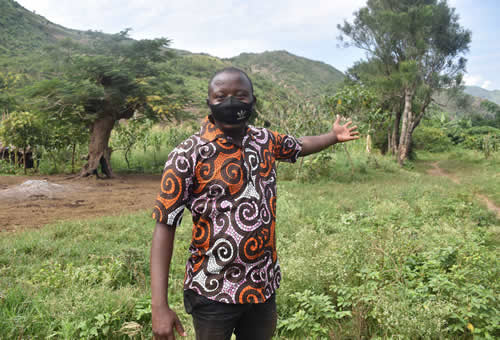
In the Democratic Republic of Congo both Groupement Kamanyola and Karhongo where the project has affected people, resettlement committees received 23 grievances. They have resolved 22 cases and till early April 2022, only one case elevated to the court level was still pending. In Rwanda, the resettlement committees in both Bugarama and Nzahaha sectors have received 57 grievances, and all have been resolved accordingly.
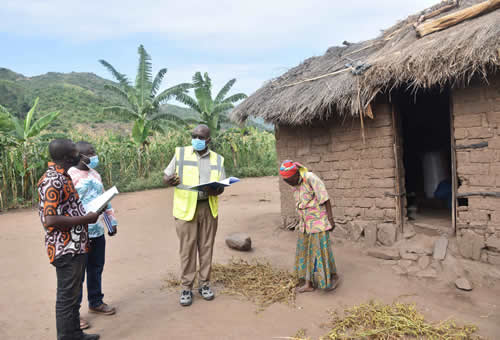
Apart from testimonies of Project-Affected people (PAPs) in Rwanda, PAPs from the Democratic Republic of Congo have also esteemed the land and property valuation process. Musaza Lugamika lives in Groupement Kamanyola, Bugano Village, Democratic Republic of Congo. He is the first advisor of the resettlement committee in Groupement Kamanyola. He said that he has appreciated the land and property valuation process undertaken by REL.
“I have three arable lands in Bugano and a house parcel hosting my mother’s grave. When REL’s valuators came, we have gone together to our lands. They recorded the area of land and counted everything including fruits plants, plants, maize, and beans cultivated on them. The population has been satisfied with the whole process and is waiting for the valuation outcomes,” said Lugamika.
Further, Lugamika echoed the sentiment of many saying that they would request REL to ensure that the project-affected people receive fair compensation and employment opportunities.
“We request REL to ensure that the population gets fair compensation which will enable them to get replacing lands and properties. Further, during the labor recruitment process, we would like to have the project affected people considered as priorities,” he added.
Apart from being satisfied with the valuation process as well as the resettlement committees’ role, the project affected people also expect the project to accompany them throughout the livelihood restoration process after receiving compensation.
Nyirambarubukeye Placidia, 49, living in Bugarama Sector but owning lands and properties in Nzahaha Sector, Murya cell expects to be accompanied by the project to ensure that her family’s livelihoods don’t dip into poverty after compensation. “Together with my husband, we have prepared some family plans that would be implemented after receiving compensation. We agreed that we would like to buy the replacing plot of land, renovate our house and ensure that our children have better schooling opportunities,” said Placidia.
Though having some plans in place, she insisted that they would like to have them vetted by the project for advice before being implemented. “We would like to have REL’s advice on our plans. After receiving compensation fees, some families end up in conflicts leading them to poverty, but that can’t happen if we do have REL accompany around us,” added Nyirambarushimana.
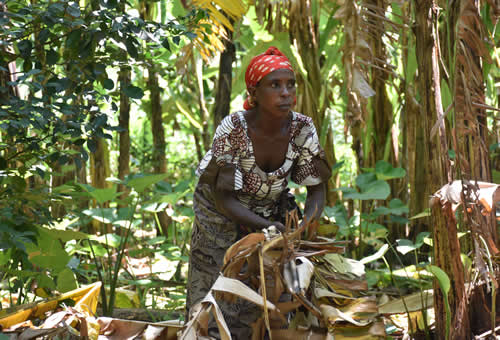
Under the Ruzizi III Hydropower Plant, the agricultural plots will be affected by various project facilities including the power station, Operator’s village, access roads, dam, reservoir, and transmission line.
The project will provide compensation for losses of production, land, and assets according to international standards and in consultation with the affected households. The resettlement and livelihood restoration program aiming at improving economic development for the Project Affected Persons (PAPs) will be enhanced and special attention will be given to vulnerable groups.